Why Every Aesthetic Treatment Should Start With a Consultation



 Jun 10, 2026
 4 min read
You've decided you want an aesthetic treatment. You've done your research, you know what you're looking for, and you're ready to book. So why does a consultation matter — and what should you do if one isn't offered?
The answer matters more than most people realise.
What a Proper Consultation Actually Looks Like
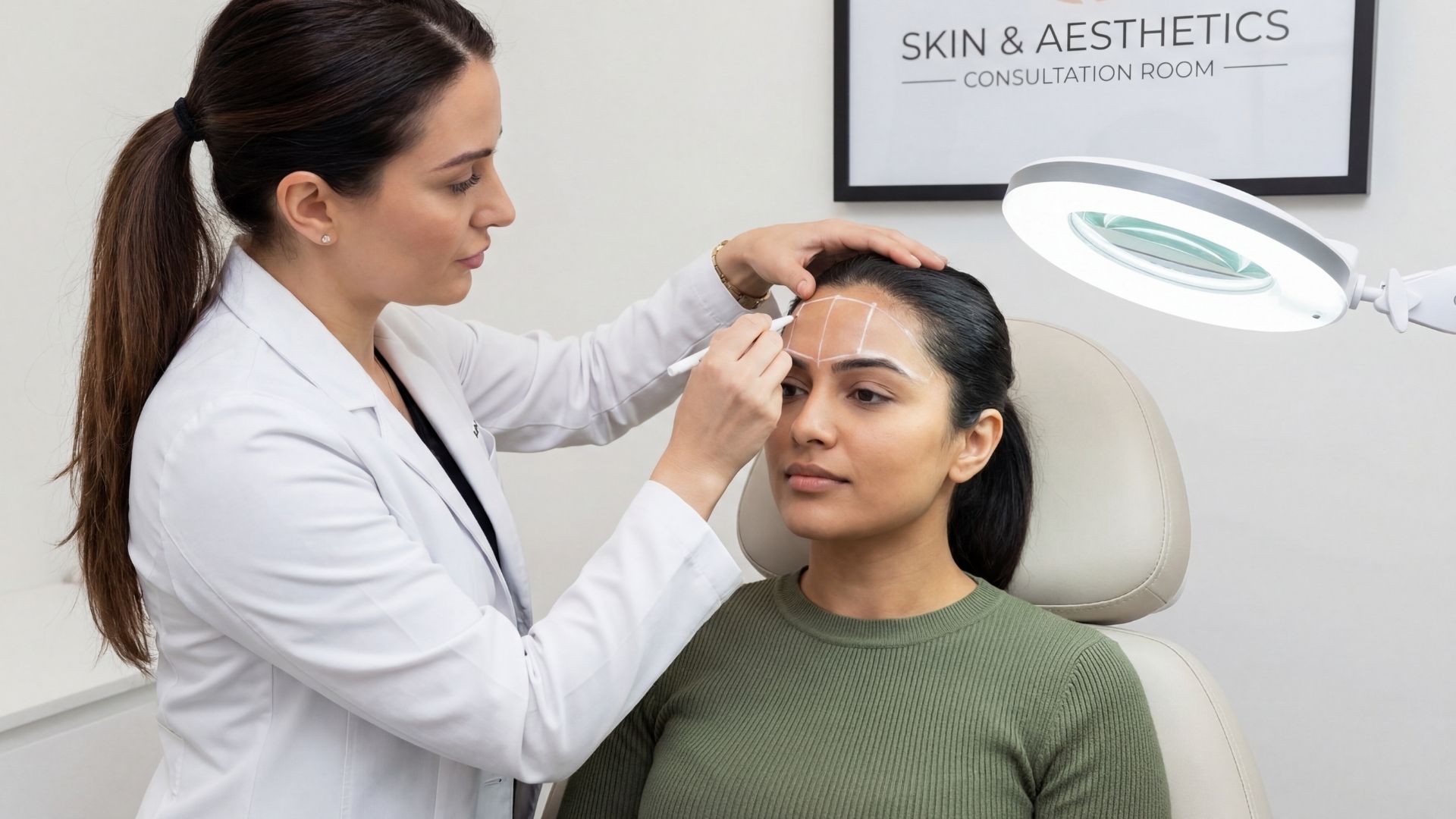
A consultation before an aesthetic treatment is not a formality. It is a clinical assessment, and it should feel like one.
A qualified professional will want to understand your full medical history — not just ask if you have any allergies. They will want to know about any medications you are taking, any previous treatments you have had, and any underlying health conditions that could affect how your skin responds or how safely a treatment can be performed.
They should examine the area you want treated and explain clearly what they are recommending and why. They should talk you through the risks — not just the benefits — and give you realistic expectations about what results are achievable for your skin type, age, and concerns.
They should also ask about your motivation. Not to judge you, but because understanding why you want a treatment helps them recommend the right one. Sometimes what a patient thinks they need and what would actually give them the best result are two different things — and a good professional will tell you that honestly.
A proper consultation ends with you feeling informed, not sold to.
Why It Matters Medically
Aesthetic treatments — even those that seem minor — carry real clinical risks. Dermal fillers can cause vascular occlusion. Chemical peels can cause burns and hyperpigmentation if not correctly matched to your skin. Anti-wrinkle injections interact with certain medications. Laser treatments on darker skin tones carry specific risks that require specialist experience to manage safely.
None of these risks can be properly assessed without a thorough consultation. A professional who skips this step is not just cutting corners — they are putting you at risk.
Consent forms are also part of the consultation process. A digital or paper consent form is not a tick-box exercise. It is a record that you have been fully informed of the risks and have agreed to proceed. Signing one before a proper conversation has taken place is not meaningful consent.
You should never feel rushed into having treatment immediately after a consultation, especially if you need time to consider the risks, costs or alternatives. A good professional will give you space to decide.
Red Flags to Watch For
Not all consultations are equal. Some professionals go through the motions without actually assessing you properly. Here is what to watch out for:
• No consultation offered at all — you are simply asked what you want and booked in
• No proper face-to-face assessment before treatment, especially for procedures where the skin, anatomy or treatment area needs to be examined in person
• Rushed through in a few minutes with no time for questions
• No medical history taken — just a quick form to sign
• Pressure to book or commit to a treatment during the consultation itself
• The professional cannot explain the risks for your specific skin type
Any of these should give you pause. It is completely acceptable to leave, take your time, and seek a second opinion.
What You Are Entitled to Ask Before Treatment
You have every right to ask questions and receive clear answers before agreeing to any treatment. You have the right to change your mind at any stage, including after signing a consent form. You have the right to know who is treating you, what qualifications they hold, and whether they are independently verified.
A professional who is genuinely qualified will welcome every question you ask. One who becomes defensive, dismissive, or pressuring when asked about their credentials is telling you something important.
Questions to Ask in Your Consultation
• What do you recommend for my specific concern, and why?
• What are the risks for my skin type?
• What does aftercare involve?
• What happens if I have a reaction or complication?
• Can I see your qualifications or verification details?
• How many times have you performed this treatment?
Write them down if you need to. A good professional will not mind.
How Compare Cosmetic Can Help
Compare Cosmetic is designed to help patients find professionals whose key credentials — including qualifications, professional registration and insurance — are independently checked and continuously monitored.
Finding a professional who takes consultations seriously starts with finding a professional who takes their responsibilities seriously. That is what Compare Cosmetic is built to help you do.
Because a consultation is not a delay, a formality or an obstacle. It is one of the most important safety steps in your treatment journey.