Acne: Why It's Not Just About Your Skin



 Jul 01, 2026
 6 min read
Why genetics, hormones, environment, mental health, nutrition, and your gut microbiome all play a role — and what that means for how you treat it
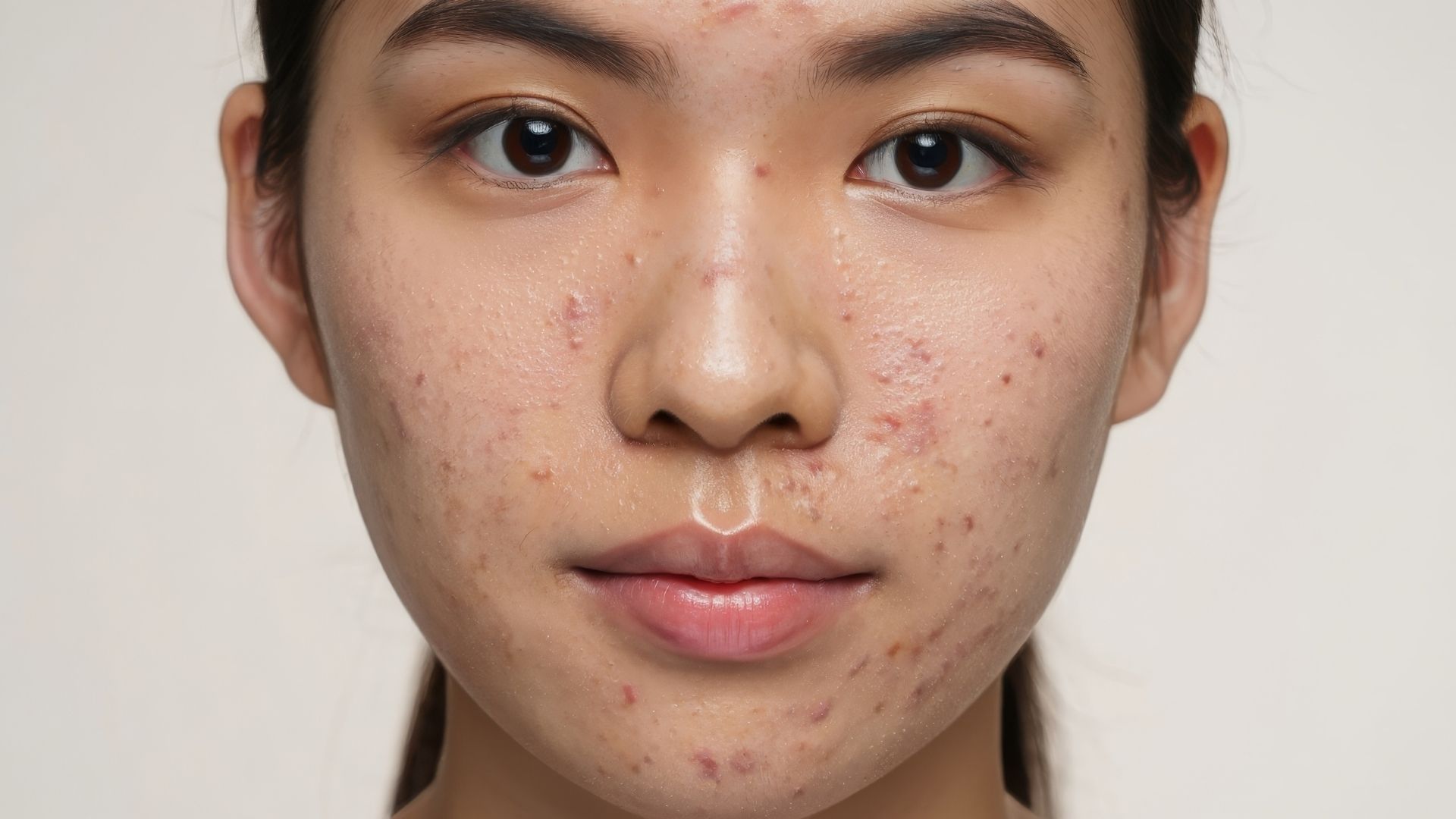
Acne is often spoken about as if it's a simple problem with a simple fix. Wash your face, try a cream, wait for it to pass. For millions of people in the UK, that advice barely scratches the surface.
What research increasingly shows is that acne is shaped by a far broader set of factors than most people — and even many healthcare providers — fully acknowledge. Understanding those factors doesn't just change how you think about acne. It changes how effectively you can treat it.
More common than you think — and it doesn't stop at adolescence
Acne affects up to 85% of people at some point in their lives, and the assumption that you simply "grow out of it" is one of the most persistent myths around the condition. A consultant dermatologist writing for the British Skin Foundation recently noted that a decade ago, nearly all her acne patients were teenagers. Today, at least half are adults.
Adult female acne in particular is increasingly prevalent. According to dermatologists cited by ABC News, roughly one in two women in their twenties, one in three in their thirties, and one in four in their forties experience adult acne — a pattern that makes the "teenage phase" framing feel entirely inadequate.
Genetics — the foundation
If your parents had acne, the evidence suggests your risk is considerably higher. A 2025 review in the Annals of Human Genetics confirmed that acne vulgaris has a well-established genetic component — characterised by comedones, papules, and pustules, and influenced by inherited predispositions. But genetics alone doesn't determine your outcome.
Epigenetics — where genes meet life
This is where acne science has become genuinely interesting. Your genes can be modified by your environment — including diet, stress levels, pollution, sleep, and medication — in a process called epigenetics. Changes in DNA methylation, one of the primary mechanisms of epigenetic modification, have emerged as a significant area of research in acne over the past few years.
In practical terms: you may carry a genetic predisposition to acne, but whether and how severely it expresses is not fixed. The environment you live in, and the choices you make, interact with your biology in ways that are only beginning to be fully understood — and that are open to intervention.
Gender differences — not just about hormones
Acne doesn't affect men and women identically, and the differences extend well beyond hormones. Women experience ongoing hormonal fluctuations across the menstrual cycle, during pregnancy, and at menopause — which is why adult female acne driven by androgens is so common and persistent. But the psychosocial burden also differs significantly.
Research published in the Journal of Clinical Medicine found that female patients with acne reported significantly reduced quality of life and higher levels of stigmatisation, with anxiety levels notably exceeding those seen in male counterparts. Women may not always present with more severe acne than men — but the evidence consistently shows they suffer more from it.
Mental health — a two-way relationship
The link between acne and mental health is real, documented, and still under-addressed in clinical practice. The British Skin Foundation is clear on this: there is a higher incidence of anxiety, depression, poor self-esteem, and suicidal ideation among acne sufferers. Adults face additional challenges compared with teenagers — their acne is no longer socially "expected," which compounds feelings of embarrassment and frustration. Many adults report turning down social invitations, avoiding professional opportunities, and feeling judged in the workplace.
Research published in Clinical and Experimental Dermatology (2025) found that adolescents with acne and a low acne-related quality of life showed significantly reduced self-esteem, lower resilience, and higher psychological distress. Social media addiction and prolonged screen time were independently associated with worse outcomes; physical activity and social support were protective.
This relationship runs in both directions. Psychological stress worsens acne by increasing cortisol and androgen levels, which drive sebum production and inflammation. And worsening acne increases psychological distress. Treating the skin without addressing the mental health dimension often addresses only half the problem.
The gut-skin axis
One of the more striking developments in acne research over the past decade is the growing evidence for a gut-skin connection. A 2024 review in the journal Nutrients found that people with acne often show reduced gut microbiome diversity. Diet is one of the most important factors shaping the gut microbiome's composition — and the gut microbiome, in turn, influences immune regulation and skin inflammation.
The same review found that diets high in antioxidants, fibre, and phytonutrients appear beneficial for skin health, while poor dietary choices can disrupt gut homeostasis and worsen outcomes. Probiotic and synbiotic interventions have shown promise in reducing acne severity in clinical trials, though more research is needed to establish optimal approaches.
Environment — stress, pollution, and modern life
Acne is more prevalent in Westernised societies, pointing strongly to the role of modern lifestyle factors. Chronic psychological stress activates the HPA axis, increasing levels of androgens and cortisol that directly drive sebum production and inflammation. Sleep deprivation disrupts hormone regulation. Pollution and urban environments can compromise the skin's barrier function. These factors interact with genetics and hormones in ways that can significantly worsen the picture.
Nutrition — what the evidence actually says
Diet and acne have a complicated history in medicine. For decades, the link was dismissed. More recent research has firmly restored it as a legitimate and clinically relevant variable.
The strongest dietary evidence points to high-glycaemic foods — white bread, sugary drinks, processed snacks — which spike insulin and IGF-1, increasing androgen activity and sebum production. Dairy has a real but inconsistent association with acne; whole milk and skimmed milk appear more problematic than cheese in several studies, possibly because of their effect on blood sugar and growth hormones.
A Mediterranean-style diet, rich in polyphenols and anti-inflammatory foods, has been associated with lower acne severity in multiple studies. Omega-3 fatty acids, zinc, and vitamins A, C, D, E, and B-complex all appear to play roles in skin health and acne management. Dietary changes alone rarely clear moderate to severe acne — but ignoring diet while treating only the surface misses a genuine contributing factor.
What this means in practice
Acne is a multifactorial condition — and effective management usually reflects that reality. Topical treatments and medications address the surface. But genetics, hormones, stress, gut health, environment, and nutrition are all part of the same system.
If you have been treating acne for a long time without fully exploring these dimensions, or if your acne is affecting your mental health and confidence, that is exactly the conversation worth having with a qualified professional. Not just a prescription, but a proper assessment of the full picture.
On Compare Cosmetic, every professional is verified before they go live — registration, qualifications, and insurance, all checked. Because a condition as complex as acne deserves someone properly equipped to help you navigate all of it.